
Why Your Running Balance Can Differ From Your Available Balance
Thomas Gak-Deluen8 min read

Your running balance and available balance can differ even when every transaction is correct. One tracks how the account balance changes as transactions are recorded. The other reflects what your bank currently treats as available to withdraw or spend, after accounting for certain holds and pending activity.
That difference matters when a debit card purchase is awaiting settlement, a deposited check is still on hold or a payment has not reached your bank. Understanding which transactions each number includes helps you avoid spending money that is already committed.
What each balance actually means
Banking terminology is not completely standardized. Before comparing numbers, check how your bank defines the labels in its app or statement, especially whether a transaction view includes pending entries.
| Balance label | What it generally represents | Main limitation |
|---|---|---|
| Balance after each transaction | The account balance recalculated after each entry in the displayed sequence | Its meaning depends on which entries the view includes |
| Current or ledger balance | The balance based on transactions recorded to the account | It may not reflect pending card authorizations or deposit holds |
| Available balance | The amount the bank currently treats as available for withdrawal or spending | It may not account for checks or payments the bank has not received |
| Statement closing balance | The recorded balance at the end of a statement period | It is a historical snapshot, not a live spending figure |
A running balance is a calculation, rather than a guarantee that the resulting amount is immediately spendable. On a statement containing only posted transactions, it typically follows this relationship:
Previous balance + credits − debits = balance after the next transaction.
This article focuses on checking and savings accounts. Credit cards use different concepts, including an amount owed and available credit. Those distinctions are covered in our guide to credit card statement terms that affect what you owe.
Why the amount available to spend can be different
Pending card authorizations reserve money before settlement
When you use a debit card, the merchant can request authorization before submitting the final transaction. Your bank may reduce the available amount immediately, even though the purchase has not posted to the account ledger.
Hotels, rental car companies and gas stations may authorize an amount that differs from the final charge. Restaurant tips can also change the amount that eventually settles.
During that interval, your running balance may still reflect only posted transactions, while your available balance already accounts for the authorization. When the final purchase posts, the authorization should be replaced or released rather than becoming a second permanent charge.
Release timing varies. If both entries appear, check whether one is still pending before treating them as a duplicate debit.
Deposits can be recorded before all the money is available
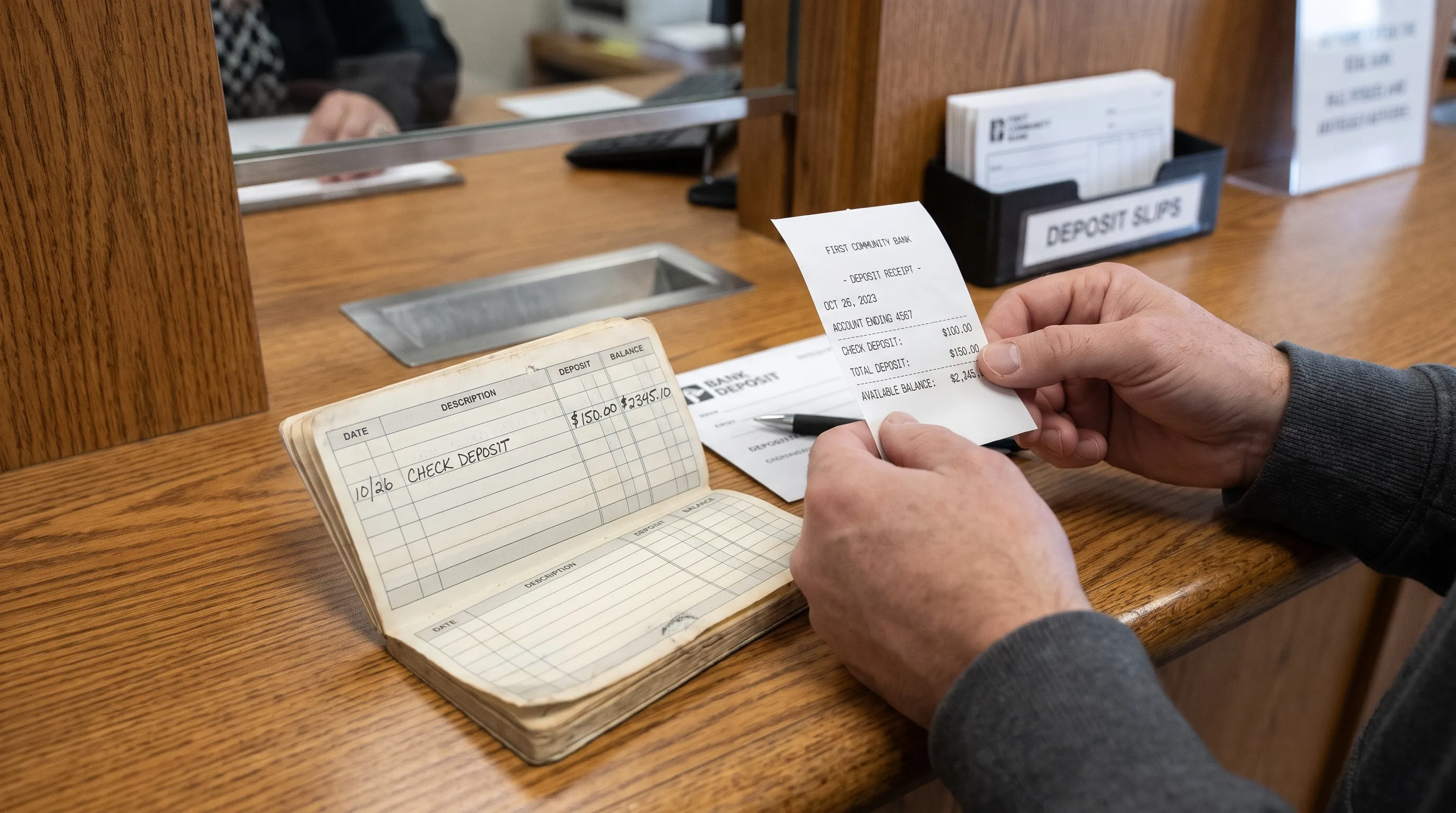
A check deposit may appear in account activity before you can use its full value. Your bank might make part available and hold the remainder under its funds-availability policy and applicable rules.
For example, a $500 deposit could increase the recorded balance by $500 while increasing the available amount by less, or not yet increasing it at all. Some banks instead show the deposit as pending before recording it to the ledger.
Check the deposit receipt or hold notice for the release date and amount. Do not assume that a visible credit means the bank has made every dollar available. Even funds made available from a check can later be reversed if the check is returned.
Some commitments are invisible to the bank
An outstanding paper check can remain absent from both figures until it is presented. A bill payment scheduled through a merchant may also be missing until the merchant submits it.
Your running balance can therefore be mathematically correct while still overstating what you can safely spend. The same warning applies to an available amount that does not yet reflect those commitments.
Expected refunds and incoming transfers create the opposite risk: you may count money before it arrives. A merchant's refund confirmation does not necessarily mean your bank has received and made the credit available.
Keep your own record of upcoming withdrawals rather than relying entirely on the bank's display.
An example of running balance versus available balance
Consider an account with $1,000 and no existing holds. In this example, the bank records a check deposit before releasing the funds, and its transaction balance includes posted entries only.
| Event | Posted account balance | Available balance |
|---|---|---|
| Starting position | $1,000 | $1,000 |
| A $200 payment posts | $800 | $800 |
| A $120 debit card authorization appears | $800 | $680 |
| A $300 check deposit posts, with the full deposit held | $1,100 | $680 |
| The card purchase settles for $115 and the $120 authorization is released | $985 | $685 |
| The $300 deposit hold is released | $985 | $985 |
The $1,100 figure is not an error. It includes the recorded deposit but excludes the unsettled card purchase. The $680 figure reflects both the card authorization and the unavailable deposit.
When the card purchase settles for $115, the bank replaces the $120 reservation with the actual debit. Availability increases by $5 because the final purchase is smaller than the authorization.
Finally, releasing the deposit hold changes availability without creating another $300 deposit. Adding that deposit again would double-count it.
These amounts are illustrative. Actual displays depend on your bank's posting practices, hold rules and treatment of pending activity.
How to explain a difference without double-counting
Compare figures from the same moment
Start with the same account and timestamp. Comparing last month's closing figure with today's app balance mixes two periods and cannot isolate a hold or pending purchase.
For a live comparison, collect the current posted balance, pending transactions, deposit holds and available amount. For a statement review, use transactions through the statement's closing date.
A running balance taken from an older PDF cannot establish today's spending capacity. Later withdrawals, deposits and holds may have changed the account since the document was issued.
Preserve the bank's transaction sequence
When checking statement arithmetic, keep transactions in their original order. Several entries can share a date, but their intermediate balances depend on the sequence used by the bank.
Sorting same-day rows alphabetically or grouping all deposits before withdrawals can make individual balances appear wrong even when the final total is unchanged. Preserve a statement row number or source sequence alongside the transaction date when exporting data.
Also distinguish posting dates from purchase dates. A weekend purchase may post later, so a personal spending log and a bank statement can legitimately place it on different dates.
Build a bridge from posted funds to available funds
For a straightforward deposit account, a useful explanatory model is:
Available funds ≈ posted balance − pending debit reservations − unavailable portions of posted deposits.
Include only items that your bank actually uses in its availability calculation. Other restrictions or account-specific adjustments may also matter, and some banks display an overdraft facility separately or incorporate it into a spending figure. Borrowing capacity is not your own deposited money.
The most common mistake is subtracting the same purchase twice. Once a debit posts, it is already included in the posted balance. Do not subtract its old authorization again unless the bank is still applying a separate hold that needs investigation.
Similarly, subtract only the held portion of a deposit already included in the ledger. A pending deposit that has not entered the ledger should not be deducted from it.
If your running balance still does not reconcile, compare individual entries against the original statement. Our guide to verifying an account balance statement before reporting covers the document checks needed before relying on the figures.
Which number should you use before spending?
The available amount is usually the better starting point for an immediate withdrawal or debit card purchase. It is not a complete forecast of your account.
Subtract commitments the bank has not yet recognized, such as outstanding checks and upcoming automatic payments. Avoid counting expected deposits until you know when they will be available, and leave room for final charges that may differ from their authorizations.
For a business, this distinction also separates bank availability from cash-flow planning. Money available today may already be needed for payroll, taxes or supplier payments. Businesses managing recurring reconciliation gaps can seek bookkeeping and accounting support from Reach Professional to help keep bank records and payment commitments aligned.
If a difference remains unexplained, ask the bank which holds or pending entries make up the gap and when each is expected to change. Report unfamiliar transactions promptly through the bank's official channels.
Frequently asked questions
Can I spend my running balance? Not necessarily. It may include held deposits or exclude pending withdrawals. Start with the bank's available amount, then account for payments you have committed to that the bank has not yet received.
Why did my available amount change without a posted transaction? A card authorization, deposit-hold release or another availability adjustment can change spendable funds without adding a new posted debit or credit. Check pending activity and hold notices.
Does an available balance guarantee I will avoid an overdraft? No. An outstanding check, an upcoming automatic debit or a larger final card charge can still affect the account. Posting order and your account terms also matter.
Can a spreadsheet prove what is available to spend? A spreadsheet can reproduce statement arithmetic and track known commitments. It cannot independently confirm live bank holds or authorization changes without current information from the bank.
Check statement arithmetic before using the figures
When you need a reliable transaction record, Extract Bank Statements converts bank statement PDFs into CSV or Excel and verifies extracted figures against the statement's running balance and declared totals before export. It also supports scans and photos through OCR.
That verification checks consistency with the document, not live availability or whether every transaction was authorized. Use the exported records for reconciliation, then check your bank's current holds and your outstanding commitments before making spending decisions. Free first conversions are available.