Credit Card Statement Terms That Affect What You Owe
Thomas Gak-Deluen9 min read
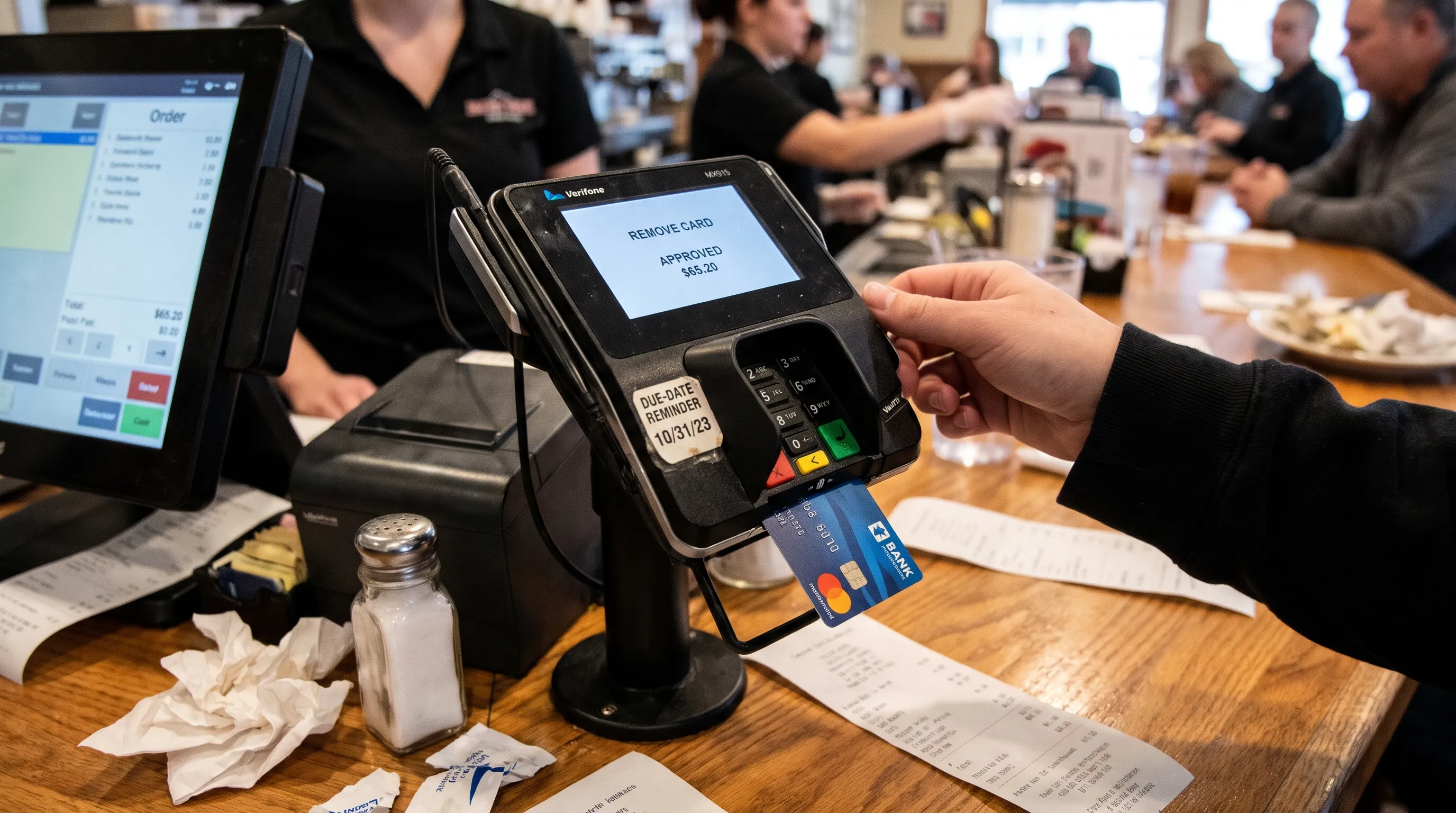
A credit card statement shows more than a list of purchases. Its balance labels, interest terms and payment deadlines determine how much you must pay now, whether interest accrues and what could become overdue. The most useful distinction is between the amount needed to keep the account current and the amount needed to avoid purchase interest. Those are often different numbers.
This guide explains the terms behind those amounts, with examples focused on U.S. consumer credit cards. Business cards can have different contractual terms and legal protections.
Billing cycle and closing date: when the numbers become fixed
The billing cycle is the period covered by the bill. It usually spans about a month, but it does not necessarily match a calendar month.
The closing date is the last day of that cycle. The issuer calculates the period’s statement balance using transactions, payments, credits, fees and interest posted through closing. A purchase made near that date might appear in the next cycle if it posts later.
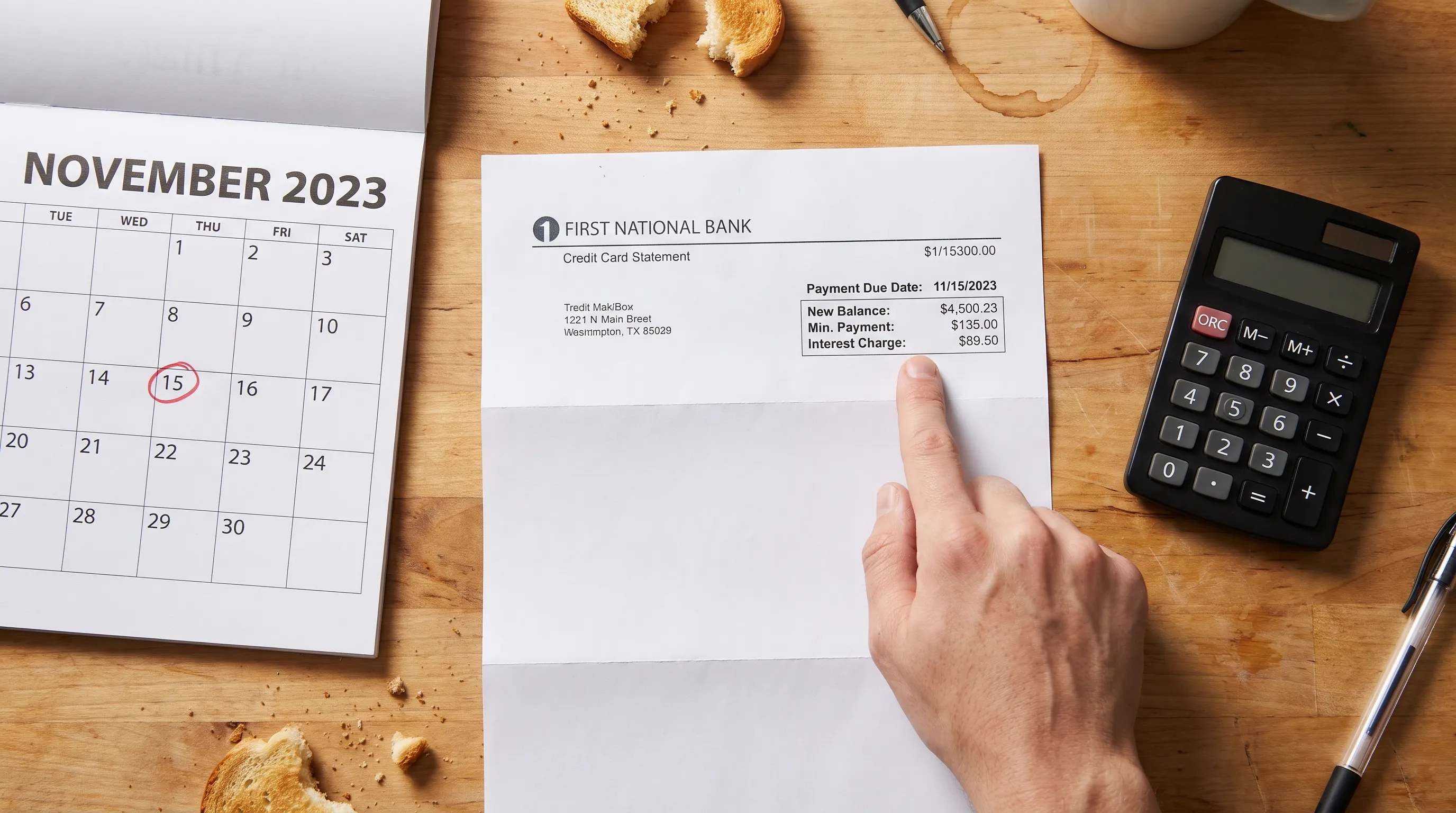
The payment due date comes afterward. It is the deadline for the required payment, not the end of the spending period.
For example, a cycle ending September 18 might have a payment deadline in October. Purchases posted after September 18 generally belong to the following statement, even though you can already see them online.
Credit card statement balances: what each number means
Several balances can appear together without contradicting one another. Each answers a different question.
| Term | What it means | What it tells you about payment |
|---|---|---|
| Statement balance or new balance | The amount owed at the cycle’s close | Usually the reference amount for avoiding purchase interest when a grace period applies |
| Current balance | The updated balance reflecting subsequent posted activity | May include purchases that are not due this cycle |
| Minimum payment due | The smallest required payment for that billing period | Paying it on time generally avoids becoming past due, but usually does not avoid interest |
| Past-due amount | A required payment left unpaid from an earlier period | May already be included in the displayed minimum; check the labels before adding amounts together |
| Available credit | The remaining amount you can borrow, subject to issuer rules and holds | It is borrowing capacity, not an amount you owe |
Suppose the closing balance is $600. After closing, another $120 purchase posts and you make a $100 payment. Your current balance becomes $620, but the unpaid portion of the original statement balance is $500. Assuming an active purchase grace period and no special balance arrangements, that $500 is the remaining amount to pay by the original deadline to avoid purchase interest.
If your credit card statement includes an “interest-saving balance,” “adjusted balance” or installment-plan payment, read its definition. A plan can change which amount you need to pay without ending the plan early.
Minimum payment and due date: staying current is not interest-free
The minimum payment may combine a percentage of the balance, interest, fees, installment amounts or past-due sums. Issuer formulas vary, so do not estimate it from a previous month.
Paying the minimum is not the same as paying off the bill. The repayment warning on many consumer statements illustrates how long minimum-only payments could take and may show an amount designed to repay the balance in three years. Those projections rely on stated assumptions, including no new purchases.
Check the issuer’s payment cutoff and processing rules. A payment scheduled through another bank’s bill-pay service may need to be sent earlier than a payment made through the card issuer’s own system.
If you fund client work with a card, your customer’s invoice deadline does not extend your card payment deadline. For music licensors, guidance on music licensing payment terms that prevent collection delays can help address payment triggers and invoice-processing obstacles. Keep expected receipts separate from money already available to pay the issuer.
When reading a credit card statement, identify both the minimum required payment and the amount needed to preserve your purchase grace period before choosing an autopay setting.
APR and grace periods: when borrowing starts costing money
Purchase APR and the grace period
The annual percentage rate, or APR, expresses an interest rate on an annual basis. A single account can have different APRs for purchases, balance transfers and cash advances.
A grace period is the interval between the end of a billing cycle and the payment deadline during which eligible purchases can avoid interest if you meet the conditions. The Consumer Financial Protection Bureau’s explanation of grace periods notes that issuers are not required to offer one, although many do for purchases.
If you carry a balance, you may lose that protection. New purchases can then accrue interest from their transaction dates. Paying in full later may not immediately restore the grace period; check your agreement.
Balance subject to interest and daily periodic rate
The balance subject to interest is not necessarily the closing balance. Many issuers use an average daily balance, so payment timing and new transactions affect the calculation.
A simplified example: a constant $1,000 balance at 24.99% APR for 30 days produces approximately $20.54 in interest when calculated as $1,000 × 0.2499 ÷ 365 × 30. Actual calculations depend on the agreement, daily balances and rounding.
Use the rate table on your credit card statement to identify which balance attracted each rate. Applying the purchase APR to the entire closing balance can give the wrong result when several balance categories exist.
Promotional rates, fees and residual interest
A 0% introductory APR and deferred interest are different arrangements. With a true 0% promotion, interest does not accrue at the promotional rate during the offer period, though fees may still apply. With deferred interest, failing to satisfy the payoff conditions can trigger interest calculated back to the purchase date.
Check the promotional expiration date separately from the ordinary payment deadline. Making every minimum payment does not guarantee that you will clear the promotional balance in time.
Residual interest, sometimes called trailing interest, can appear after you pay off an interest-bearing balance. It reflects interest accruing between the previous closing date and the date the issuer receives your payoff. Ask the issuer for a payoff amount if you need to bring an interest-bearing account fully to zero.
Fees can also increase what you owe independently of APR. Balance transfer fees, cash advance fees, annual fees and late fees are distinct charges. A cash advance may involve both a transaction fee and interest without a purchase-style grace period.
For foreign purchases, distinguish the merchant’s currency amount, the converted account-currency amount and any foreign transaction fee. A conversion difference alone does not establish an error.
Posting dates, payments and refunds: why online totals differ
The transaction date records when an activity occurred. The posting date records when the issuer entered it into the account. Posting usually determines which billing cycle contains the item.
A pending authorization is different again. A hotel or gas station hold may reduce available credit before a final charge posts. It is not necessarily part of the posted current balance, and the final amount can change.
Refunds create another timing issue. A merchant may confirm a refund before it reaches the issuer. Until it posts, do not assume it has reduced the amount you need to pay.
Even after posting, a refund may not count toward the required minimum payment. Ask the issuer how a credit affects the amount due rather than treating it as interchangeable with a payment.
Your credit card statement remains a record of the closed cycle. A later payment or refund changes the live account balance, not the historical PDF. Compare dates before concluding that either record is wrong.
Billing errors and unfamiliar charges: identify the right remedy
An unfamiliar merchant description is not automatically fraud. It may identify a parent company, payment processor or subscription billed under a different name. Compare the amount and date with receipts, authorized users’ purchases and recurring services.
If you suspect unauthorized use, contact the issuer immediately through its official app or the number on the card. Lock the card if that option is available, but do not treat locking it as a substitute for reporting the transaction. Our guide to investigating a transaction you do not recognize explains how to collect supporting evidence.
For covered U.S. consumer billing errors, federal billing-error rules generally require written notice within 60 days after the issuer sends the first statement containing the error. Use the designated billing-inquiries address, not automatically the payment address, or an electronic method the issuer authorizes for such notices.
Save the relevant credit card statement, receipts, correspondence and case number. Follow the issuer’s instructions for disputed amounts and continue paying the undisputed portion on time. Reporting fraud promptly and preserving formal billing-error rights are related but separate steps.
A practical way to check the amount before paying
Start with the account-summary arithmetic:
Previous balance + purchases + transfers + advances + fees + interest − payments − credits = new balance.
Use the categories actually shown, since issuers may group them differently. A matching total confirms arithmetic consistency, not that every transaction was authorized or every fee was justified.
Next, compare the closed-cycle amount with payments and credits posted afterward. Confirm the remaining payment requirement in the issuer’s live account view, especially if you have a promotion or installment plan. For a more detailed reconciliation process, use our guide to auditing a monthly card statement before payment.
Download the original PDF from the issuer’s official website or app and keep all pages. Store it in a protected location, restrict access and redact account details before sharing it unnecessarily.
If you convert a credit card statement into a spreadsheet, preserve separate columns for transaction dates, posting dates, charges and credits. Keep the original PDF so you can trace any extracted figure back to its source.
Frequently asked questions
Should I pay the statement balance or current balance? With an active purchase grace period, paying the full remaining statement balance by the deadline generally avoids purchase interest. The current balance may include newer purchases not yet due. Carried balances, cash advances and payment plans can require different treatment.
Does a refund replace my minimum payment? Not necessarily. A refund can reduce the account balance without satisfying the required minimum. Confirm the remaining amount due with the issuer, particularly when a refund posts close to the deadline.
Why did interest appear after I paid the balance? If you previously carried an interest-bearing balance, residual interest may have accrued before your payment arrived. Check the interest period and ask whether another amount is needed to reach a full payoff.
Where can I find my credit card statement? Sign in through the issuer’s official website or app and look for statements, documents or billing history. Select the billing period and download the PDF. You can also ask the issuer about paper copies or older records.
Turn statement figures into usable records
Extract Bank Statements converts credit card PDFs, scans and photos into Excel, CSV, OFX or JSON. It checks extracted figures against statement totals and running balances where available before export. Use those checks to establish numerical consistency, then review payment terms, unfamiliar charges and interest eligibility separately. Free first conversions are available.