When Does a Direct Deposit Appear on Your Bank Statement?
Thomas Gak-Deluen9 min read
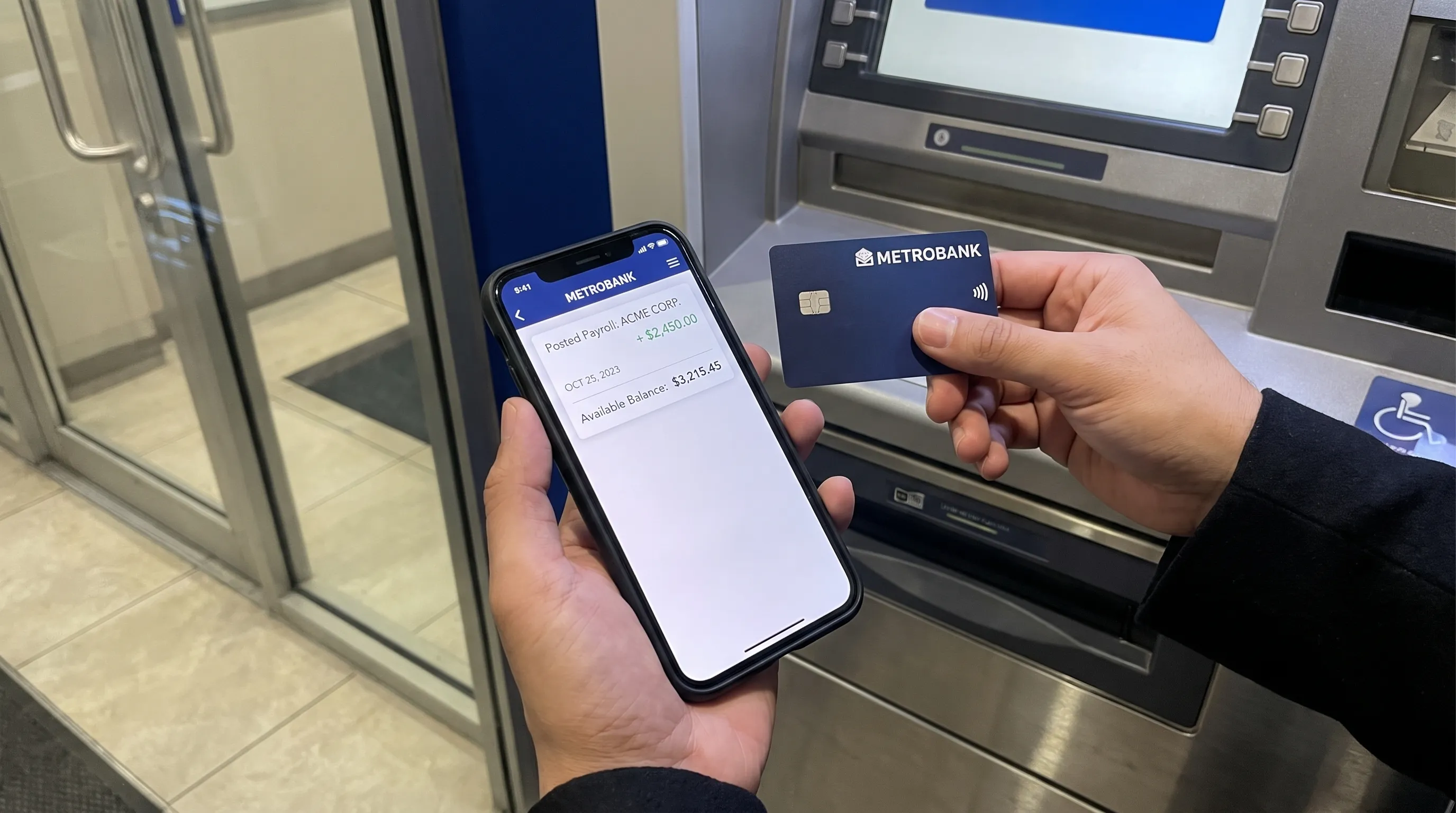
A direct deposit normally appears on your bank statement once it has posted to your account and falls within that statement’s reporting period. If you need a direct deposit bank statement today, your online transaction history may show the payment before the monthly PDF is available. A statement that closed before the deposit posted will not normally update to include it.
The distinction is between seeing money in your account, being able to spend it and having an official statement that records it.
Pending, posted and available mean different things
Your bank app may display a deposit at several stages. Those labels do not all mean the payment is ready to appear on a finalized statement.
| Status or document | What it generally means | What it tells you about statement timing |
|---|---|---|
| Pending deposit | The bank can see an incoming payment but has not finished posting it | It usually will not appear as a completed transaction on an official statement yet |
| Posted deposit | The bank has recorded the credit in the account ledger | It normally belongs to the statement period containing its posting date |
| Available funds | The bank lets you use the money | Availability alone does not establish which statement will show the deposit |
| Published statement | The bank has generated a document for a completed reporting period | It generally includes posted transactions within that period |
Banks can display these stages differently, especially when they offer early access to payroll. An app notification that your paycheck is available does not necessarily mean a new statement PDF exists.
For a direct deposit bank statement request, check the transaction’s posted date and the statement’s start and end dates, rather than relying only on the available balance.
How the statement closing date controls the timing
Statements follow reporting cycles, which do not always match calendar months. Your account might have a cycle that ends on the 15th, for example. The bank then publishes the statement according to its own schedule.
Consider this hypothetical account with a July 1 through July 31 statement period:
- A payroll deposit posts on July 30: it normally appears on the July statement once that document is issued.
- Payroll is pending on July 31 but posts on August 1: it normally appears on the next statement instead.
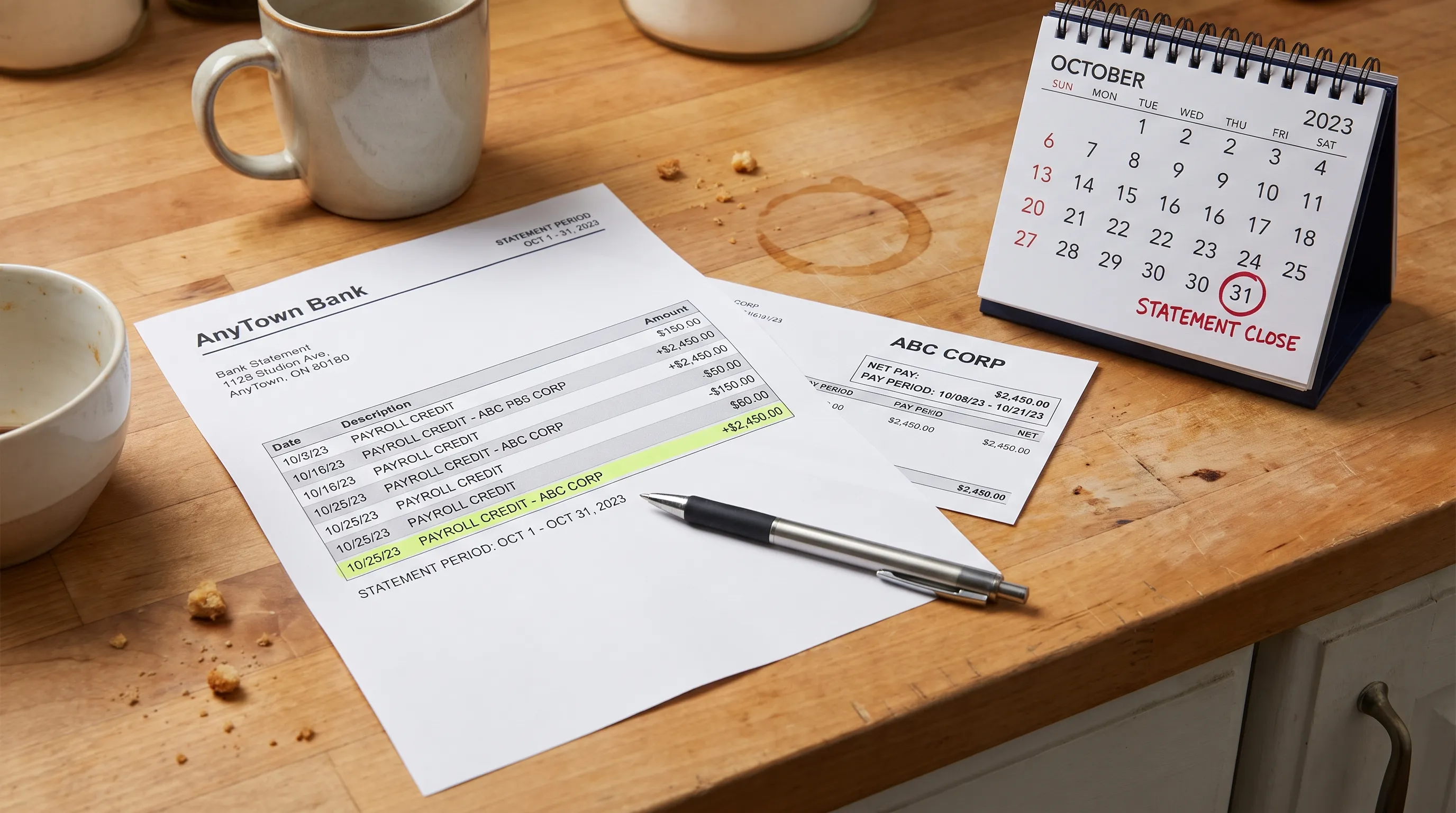
- You download the July statement again on August 5: the August 1 payment does not normally get added to that closed period.
A deposit near the cutoff should be checked against the posting date the bank actually records, not the date you expected the money or received a payroll email.
If you need proof before the next statement is issued, ask the recipient whether a bank-generated transaction record or current activity report is acceptable. Banks may offer interim documents, but not every bank does.
Our guide to downloading bank records for a custom date range explains why a transaction-history export and an official statement are not interchangeable.
How to find your direct deposit bank statement
Sign in through your bank’s official app or website, select the account that receives the payment and open the statements or documents area. Choose the reporting period containing the deposit’s posted date, then download the original PDF.
If you cannot find the deposit, search the account’s live transaction history first. The description may contain your employer’s name, a payroll processor’s name or wording such as “PAYROLL,” “ACH CREDIT” or “DIRECT DEP.” Banks and payment senders use different descriptions, so there is no universal label.
Compare the amount with your pay stub’s net pay allocated to that account, not your gross salary. Taxes, benefit deductions and a split deposit across multiple accounts can explain why the bank credit differs from the headline amount on your pay stub.
A credit entry alone does not establish that a payment is wages. Refunds, transfers and other incoming payments can also appear as credits. Match the payer description, amount and expected payment date before treating an entry as payroll evidence.
What to do if the deposit is missing
First establish what is missing: the payment itself, the posted transaction or the statement containing it. If a direct deposit bank statement does not show a payment that appears in your live account history, a reporting-period mismatch may be the entire explanation.
If the payment is absent from the account too, work through these checks:
- Confirm the actual pay date: An employer’s payroll processing date or a platform’s payout initiation date may be earlier than the scheduled arrival date.
- Check the destination account: Ask payroll to confirm the account details on file, particularly after a recent change.
- Ask the sender about payment status: Confirm that the payment was released and was not rejected or returned. Request an ACH trace number if available.
- Contact your bank: Provide the expected amount, sender, scheduled date and any trace information through a secure channel.
Business-day processing can matter. Standard ACH settlement follows banking schedules, and weekends or Federal Reserve holidays can affect timing. The Federal Reserve publishes its financial services holiday schedules, but your employer’s submission timing and your bank’s posting practices also matter.
Do not assume a payment is late solely because it has not arrived on a previously observed early-pay day. Compare it with the scheduled payday and the bank’s stated terms. A statement cannot make an unreceived payment arrive or confirm that the sender released it.
Which document proves what?
Before downloading or sharing anything, ask the requesting organization what it needs to verify. A lender checking income, an employer setting up payroll and a customer confirming a payment are asking different questions.
A direct deposit bank statement can document a credit recorded in your account, but it does not necessarily establish gross earnings, employment status or future income.
| Document | What it can help demonstrate | Main limitation |
|---|---|---|
| Official bank statement | A posted deposit, its description and its relationship to account activity | May not identify the underlying income source clearly enough on its own |
| Pay stub | Pay period, gross pay, deductions and net pay | Does not independently prove that money reached the bank account |
| Bank-generated transaction confirmation | Details of a particular recorded transaction | Acceptance depends on the recipient’s requirements |
| Direct deposit authorization form | Your instructions for sending future payments to an account | Does not prove a payment has occurred |
| Bank account verification letter | Account ownership or banking details, depending on its contents | Usually does not prove receipt of a particular deposit |
For income verification, the recipient may request both pay stubs and statements so it can match payroll records with deposits. For direct deposit setup, an authorization form, voided check or account verification document may be more appropriate than a transaction statement.
Check that the account holder’s name, reporting dates and relevant payment are visible before submitting anything. Our bank statement review checklist covers document completeness and consistency checks.
Can you share a statement showing only deposits?
Banks may let you filter online activity to incoming payments, but that does not mean they offer an official deposits-only statement. A filtered CSV, screenshot or printed search result is usually a different document from the bank’s finalized monthly PDF.
If you need a direct deposit bank statement without disclosing unrelated spending, ask the recipient which alternatives it accepts before changing the document. It might accept a transaction confirmation, an interim bank record or a statement with specified redactions. It might also require a complete, unaltered statement.
When redactions are permitted, conceal only the information the recipient allows. Do not change payment dates, descriptions, amounts or balances to make the document appear more suitable. Retain the original and clearly identify any redacted copy.
Use a proper redaction tool rather than placing removable shapes over text. Check the saved copy to make sure concealed details cannot still be searched or copied. Submit financial documents through the recipient’s secure portal where available, rather than sharing them through a public link.
A platform’s payout date is not necessarily the bank arrival date
The same timing distinction matters for contractors, creators and affiliate publishers. A dashboard can show earnings as approved, eligible for withdrawal or paid before the receiving bank posts the money. Some services also pay through wallets or cards rather than depositing directly into a bank account.
If you are evaluating affiliate income, this guide to assessing daily payout claims and withdrawal conditions helps distinguish commission approval, withdrawal eligibility and payment processing. Those stages should not be treated as proof that funds have reached your account.
When using a direct deposit bank statement to document platform earnings, match the posted credit to the platform’s payout record. Allow for disclosed fees, currency conversion or combined payouts when comparing amounts. Keep both records if the bank description names a payment processor rather than the platform itself.
Frequently asked questions
How soon after payday can I download a statement showing the deposit? It depends on your statement cycle and the bank’s publication schedule. If the deposit posts during the current cycle, the regular statement containing it generally becomes available after that cycle closes. Check whether the bank offers an acceptable interim record if you need proof sooner.
Can I get a bank statement for direct deposit setup before receiving my first paycheck? Yes, an existing account statement may help verify your account if your employer accepts it. You do not need a previous payroll deposit to authorize future payments. Follow the employer’s instructions for an authorization form, voided check or bank verification letter.
Is a direct deposit bank statement the same as proof of income? Not automatically. It records account activity, but the recipient may need pay stubs, tax records or other documents to establish the source and nature of the income. A transfer from your own savings account, for example, is not new earnings.
Can the bank add a new deposit to an old statement? A newly posted payment normally belongs to the reporting period containing its posting date. Ask about a current transaction record rather than expecting the bank to add it to a previously closed statement. Corrections to genuine statement errors are a separate matter.
Organize deposits after you have the right statement
Once you have the correct bank-issued PDF, Extract Bank Statements can convert it to Excel or CSV for sorting and matching deposits. It checks extracted figures against the statement’s running balance and declared totals before export, and supports scanned documents through OCR.
Use the spreadsheet to support reconciliation, not as a substitute for the original statement when official proof is required. Conversion can help organize what the statement contains; it cannot reveal a pending deposit or establish when a missing payment will arrive.