
How OCR AI Changes Bank Statement Extraction
Thomas Gak-Deluen8 min read
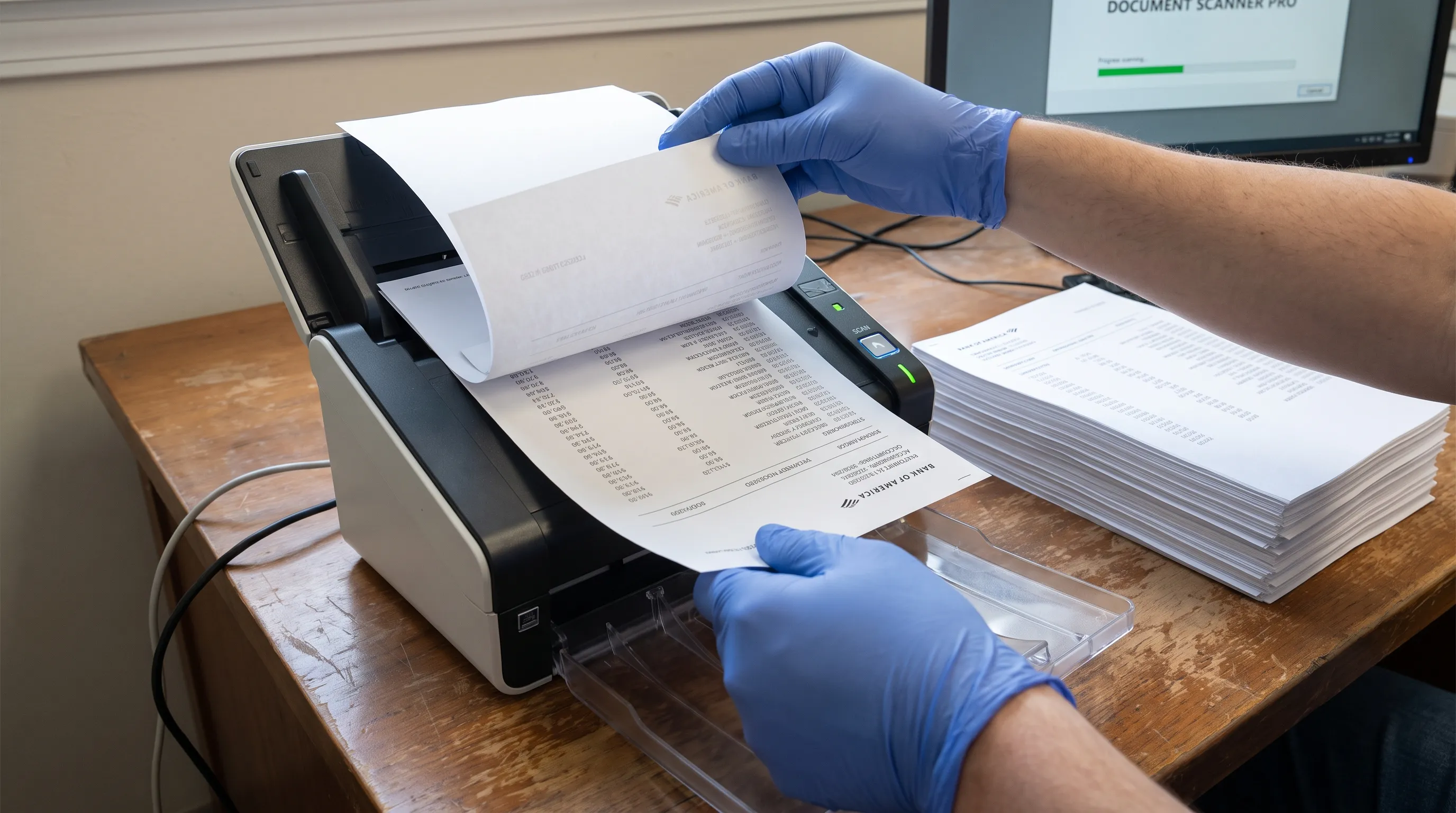
OCR AI changes bank statement extraction by helping software identify transactions, interpret column relationships and turn document content into structured records. Instead of stopping at recognized text, a system can distinguish a payment from a balance, connect a wrapped description to its transaction and normalize fields for export.
That is useful, but it does not make every extracted number correct. For financial work, the real improvement comes from combining recognition with arithmetic checks that reveal when a plausible-looking transaction table fails to match the statement.
From readable text to usable financial records
Optical character recognition converts visible characters into machine-readable text. On a scanned statement, it might recognize a date, merchant name and amount correctly without knowing that they belong to the same transaction.
AI-assisted extraction adds interpretation. Depending on the implementation, models can use layout, labels and surrounding content to assign those values to fields such as transaction date, description, debit, credit and running balance.
The distinction matters because a spreadsheet needs relationships, not just words. A recognized amount of $125.00 is not useful if it lands in the balance column instead of the withdrawal column.
This is not a clean division between “old OCR” and “new AI.” Traditional document-processing systems can also detect tables and apply extraction rules. The practical question is whether the complete system preserves transaction structure across the statements you actually receive. Our explanation of how document recognition finds fields in bank statement PDFs explores that distinction in more detail.
Where OCR AI changes bank statement extraction
Handling unfamiliar layouts
Bank statements vary in column order, transaction labeling and balance presentation. One bank separates money in and money out; another uses a single amount column with signs or debit and credit indicators.
AI-assisted systems can use those contextual signals rather than relying entirely on fixed coordinates. That can reduce the need to maintain a separate extraction template for every layout. It does not eliminate testing: an unfamiliar statement can still expose a model's incorrect assumptions.
Text-based PDFs also deserve attention. They may not need character recognition, but embedded text can arrive in an order that does not match the visible table. Reliable extraction must reconstruct the relationships regardless of how the text was obtained.
Reconstructing transaction meaning
A transaction description may occupy several lines, while its amount appears only on the first line. A statement can also repeat headings, carry balances onto another page or show dates only when the date changes.
A useful extraction system distinguishes these presentation choices from actual transactions. It preserves the source description and avoids inventing a missing date or treating a carried-forward balance as new activity.
The value of OCR AI is therefore not just recognizing more characters. It is producing records whose fields belong together, while leaving unresolved ambiguities available for review rather than hiding them behind polished output.
Why balance checks matter more than fluent output
A model can produce a convincing table with one incorrect digit. Bank statements provide an additional source of evidence: the financial relationships between balances and transactions.
For a deposit account, the usual relationship is:
Previous balance + credits − debits = next balance
Consider this illustrative example, not data from a real account:
| Statement entry | Credit | Debit | Running balance |
|---|---|---|---|
| Opening balance | $1,200.00 | ||
| Incoming payment | $850.00 | $2,050.00 | |
| Utility payment | $75.00 | $1,975.00 | |
| Card purchase | $320.00 | $1,655.00 |
If the last debit is extracted as $370.00, the calculated balance becomes $1,605.00. That disagrees with the printed $1,655.00 by $50.00.
Use discrepancies to locate uncertainty
The mismatch tells the reviewer where to investigate. It does not, by itself, prove which field is wrong: the debit, preceding balance or ending balance might have been misread.
OCR AI should support that investigation, not silently replace a number simply because another value makes the calculation work. Inspecting the source remains necessary when competing interpretations are possible.
Statement-level checks add another layer. Opening balance plus total credits minus total debits should reconcile to closing balance, and extracted debit and credit totals should match the statement's declared totals where available.
Credit card statements require different logic because purchases and charges generally increase the amount owed, while payments and credits reduce it. Validation must follow the statement's conventions rather than applying deposit-account rules indiscriminately.
What successful reconciliation cannot prove
Passing a balance check is strong evidence of arithmetic consistency, not a guarantee that the entire record is correct.
A description can be assigned to the wrong transaction without changing any totals. A date can be misinterpreted, especially when a statement uses an ambiguous format. A missing transaction and an erroneous extra transaction of the same value can also offset each other.
Likewise, reconciliation does not establish that the original PDF is authentic or that a transaction was authorized. Those questions require other evidence and controls.
For that reason, evaluate extraction on separate dimensions:
- Completeness: All transaction rows and relevant pages are represented.
- Field accuracy: Dates, descriptions, amounts and balance fields match the source.
- Arithmetic consistency: Running balances and declared totals reconcile where available.
- Traceability: Reviewers can locate the source evidence for a disputed record.
The strongest use of OCR AI keeps these dimensions separate. A high recognition-confidence score should not substitute for reconciliation, and a reconciled balance should not substitute for checking nonnumeric fields. Our guide to reading a bank statement and verifying transactions provides a complementary source-document review process.
How the work changes for finance teams
The useful shift is from retyping every row to reviewing exceptions and checking that accepted records meet defined standards. That requires a workflow, not merely a better recognition model.
Establish the record structure first
Decide which fields the downstream process needs before extraction begins. A cash reconciliation may need dates, signed amounts and balances. An accounting import may require separate debit and credit fields or a particular file format.
Preserve the original description alongside any normalized version. Changing a merchant name for convenience should not erase the wording needed to investigate a payment later. Keep account identity and currency attached to the records so unrelated accounts or currencies are not combined accidentally.
Review uncertainty before export
Route unresolved amounts, unexplained balance differences and incomplete statements for review. Where a statement lacks running balances, use the checks that are available and make the limits clear.
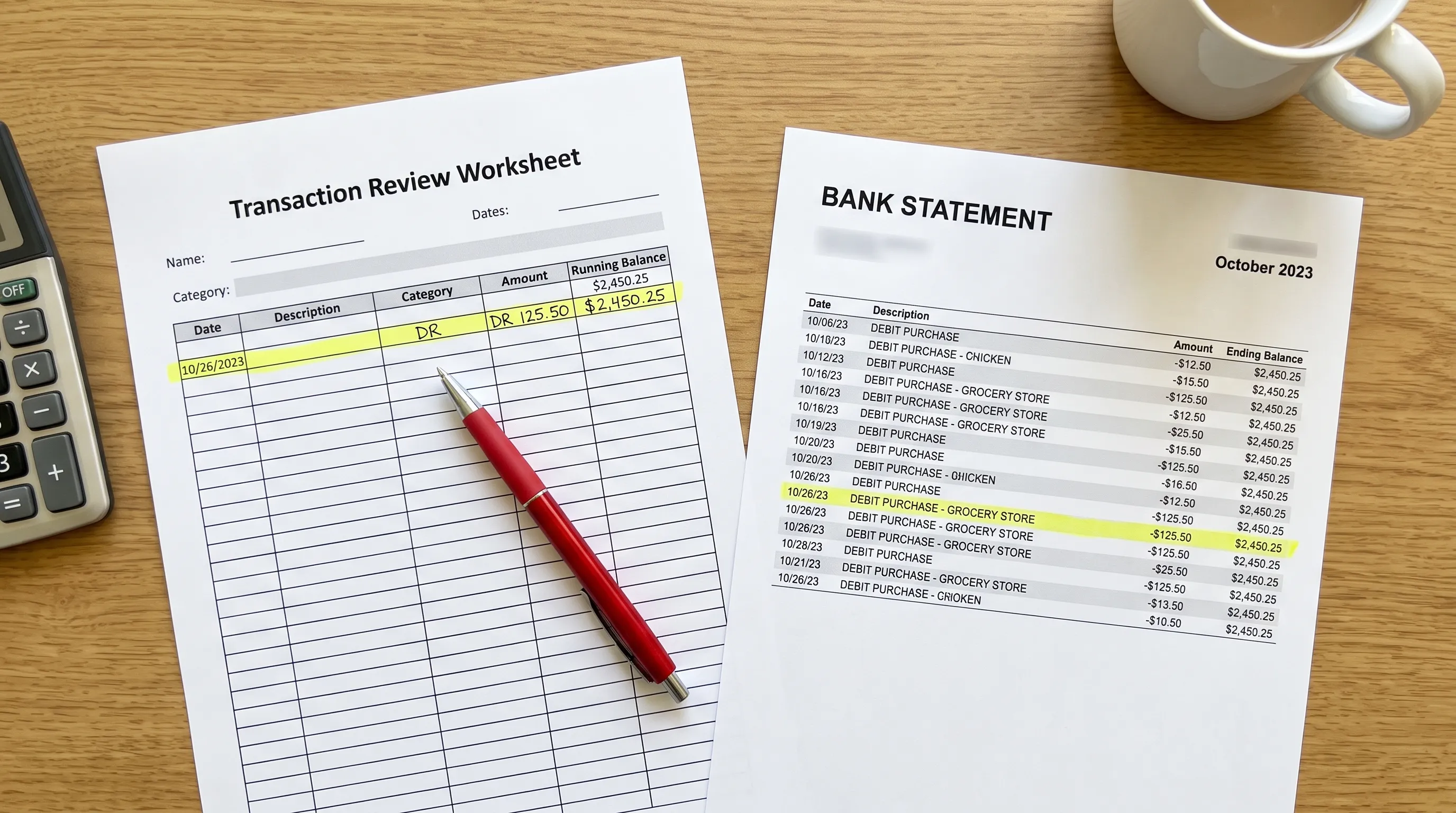
With OCR AI, review effort can become more targeted, but it should not disappear. A useful acceptance rule is that unresolved financial discrepancies must be investigated before the records enter a process that assumes the figures are correct.
Building automation without automating mistakes
An API can move statement extraction into a repeatable finance workflow. The same workflow still needs clear boundaries between receiving documents, extracting records, checking them and accepting them into a downstream system.
Keep extraction and acceptance separate
A successful API response means a request completed according to the API's rules. It does not automatically mean the resulting records satisfy your accounting controls.
Design the receiving process to check required fields, account identity, currency and reconciliation results before importing transactions. Treat transaction descriptions as untrusted data, not instructions for an AI agent. A memo field should never authorize a payment or change workflow rules.
Retries also need deliberate handling. If a timeout causes the same statement to be submitted again, downstream logic should prevent the resulting transactions from being imported twice. Use document identifiers and import records appropriate to your system rather than assuming repeated requests are harmless.
Separate paid API access from financial validation
When an OCR AI workflow uses agents that also access paid external APIs, payment authorization becomes a separate control. Mailhook's guide to x402 payments for AI agents, available in Hindi explains HTTP 402 payment challenges, payment-proof handling and retry safeguards.
Those safeguards address access and charging behavior. They do not establish whether extracted bank figures are correct. Keep service-payment records distinct from the statement data and its reconciliation evidence.
Frequently asked questions
Is AI replacing OCR in bank statement extraction? Not necessarily. Many systems combine character recognition, layout analysis and AI-assisted field interpretation. Some document models combine these functions more closely. Judge the output and its checks rather than assuming a particular architecture guarantees accuracy.
Can OCR AI guarantee an accurate spreadsheet? No. Models can misread digits, assign amounts to the wrong columns or omit rows. Running-balance checks and comparisons with declared totals help detect financial discrepancies, while source review remains necessary for unresolved issues and nonnumeric fields.
Do text-based bank PDFs need OCR? They often do not need character recognition because text is already embedded. They still need structured extraction to associate dates, descriptions and amounts correctly. A mixed PDF may contain both embedded text and scanned pages.
What should happen when the figures do not reconcile? Investigate the mismatch before accepting the data. Check the affected rows, page boundaries, debit and credit interpretation and source balances. Do not add a balancing transaction or change a value solely to force agreement.
Convert statements with verification built in
Extract Bank Statements converts bank statement PDFs into CSV, Excel, OFX or JSON and verifies extracted figures against the statement's running balance and totals before export. It supports scans and photos through OCR, as well as personal, business and credit card statements.
REST API access and integrations support automated finance workflows. Free first conversions let you test the service with your own documents. Start with a statement whose figures you can independently check, then confirm both the exported records and their agreement with the source before using them downstream.