
7 Times You May Need Bank Statements Instead of Screenshots
Thomas Gak-Deluen9 min read

A screenshot can show your balance in seconds, but you may need bank statements when someone must verify who owns the account, where money came from or what happened over a complete reporting period. Mortgage lenders, landlords and other reviewers often need more context than a banking app’s home screen provides. The right document can prevent a request for more evidence and keep your application moving.
Why a screenshot may not be enough
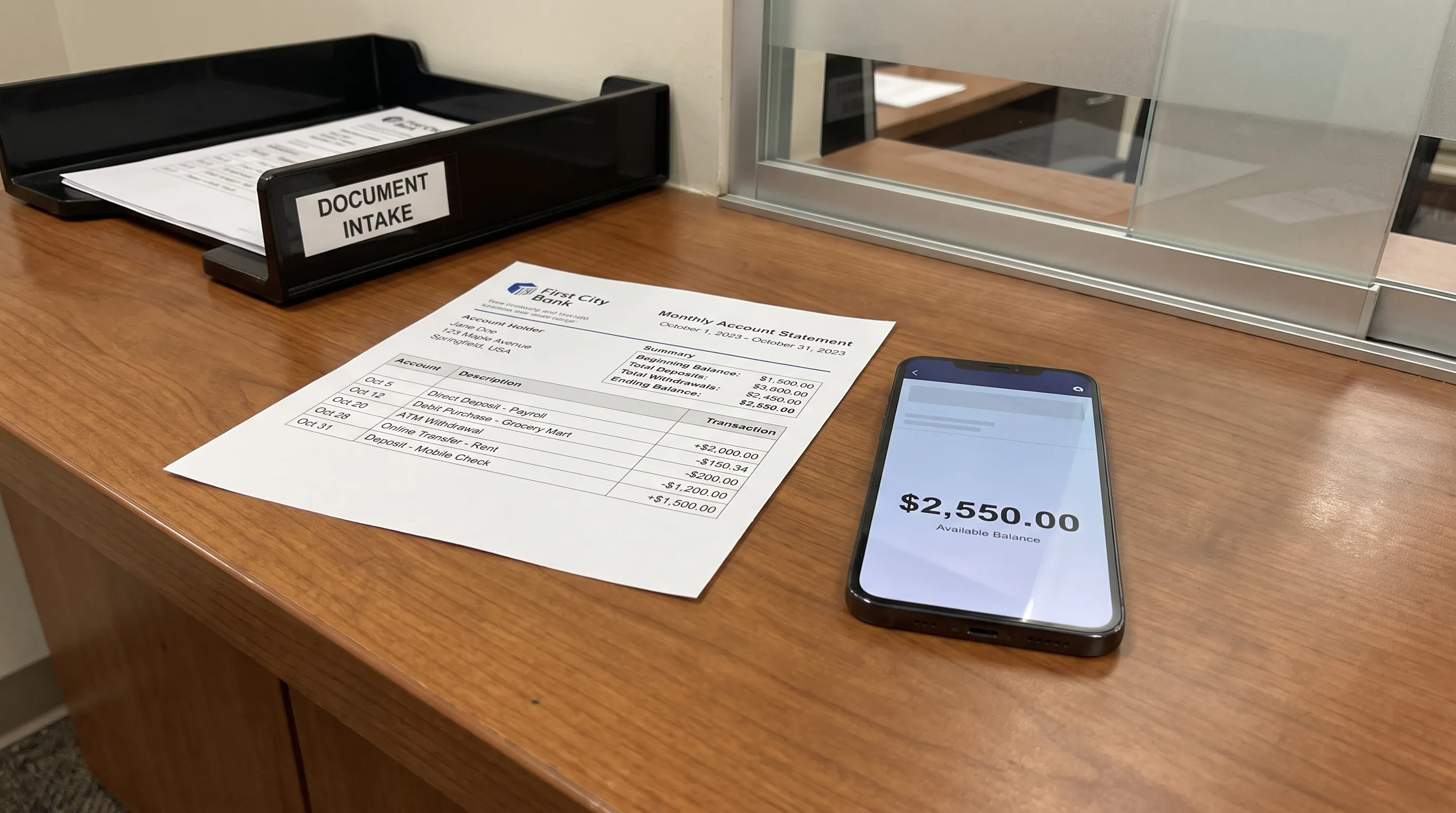
A screenshot usually captures one view of an account. It may omit the account holder’s name, transaction status, statement dates or pages containing relevant activity. A bank-issued statement brings those details together in a document covering a defined period.
| Document | What it usually shows | Main limitation |
|---|---|---|
| Balance screenshot | An account balance at a particular moment | May omit ownership details and transaction history |
| Transaction screenshot | One payment or a short activity list | May omit posting status, context or account identification |
| Downloaded transaction history | Activity within a selected date range | May lack the identifying details and format a reviewer requires |
| Bank-issued statement | Account details, a reporting period, balances and activity | May not cover transactions after the closing date |
An official electronic statement is often sufficient. Needing a statement does not automatically mean you need a paper copy, branch stamp or notarization. Ask the recipient what it accepts.
7 situations where you may need bank statements
1. Applying for a mortgage or another loan
A lender may review statements to evaluate available funds, recurring obligations and the source of deposits. A screenshot showing enough money for a down payment does not explain whether those funds came from savings, a recent transfer or another loan.
For applicable US mortgage applications, Fannie Mae’s deposit and asset verification guidance sets out requirements for statements and other acceptable verification methods. Requirements vary by loan program and underwriting process, so do not assume every lender wants the same number of months.
Provide the requested accounts and complete reporting periods, including all pages. If you want to understand the review process, our explanation of why lenders request three months of bank statements covers common reasons behind that request.
2. Renting a home when income needs clarification
A landlord or screening provider may ask for additional financial evidence if you are self-employed, recently changed jobs or receive income from several sources. They may need bank statements to understand the pattern of deposits rather than a single payday.
For example, a freelancer’s screenshot of a large client payment says little about income across several months. Statements can show whether deposits recur, although transfers between your own accounts should not be presented as new earnings.
Ask whether pay stubs, an employment letter or tax documents would satisfy the request instead. Rental documentation requirements and permitted screening practices vary by location. Before sharing statements containing unrelated purchases, confirm whether approved redactions or a less detailed document are acceptable.
3. Supporting a visa or immigration application
Some visa categories require evidence that you can support yourself or fund a trip. The relevant authority may specify the reporting period, account ownership details, document age and treatment of large deposits.
A cropped balance screenshot can leave those requirements unanswered. It also may not show whether the balance existed throughout a required period or appeared immediately before the application.
Use the checklist for the specific country and visa category rather than a general rule from another applicant. Some processes accept downloaded statements; others may require bank certification, translations or additional evidence of access to the funds.
If someone else is paying for the trip, their account balance alone may not establish sponsorship. Follow the authority’s instructions for consent, relationship evidence and supporting documents.
4. Documenting eligibility for benefits or financial assistance
Some means-tested benefit, housing assistance and financial aid processes ask about cash resources or income. You may need bank statements when the reviewing organization must establish balances and activity for particular dates.
A current screenshot cannot necessarily establish the account balance on the date the application requires. Likewise, a deposit shown without surrounding transactions may be difficult to distinguish from a transfer, refund or recurring payment.
Follow the program’s actual request. Not every benefit or aid application requires statements, and the rules for which accounts and assets count differ.
If the requested date falls between statement closing dates, ask whether the latest statement plus bank-generated transaction history will work. Do not substitute today’s balance without explaining the difference.
5. Preparing tax records or supporting business expenses
Statements help connect payments in your bookkeeping to money that actually entered or left an account. A collection of screenshots is harder to review because individual transactions may overlap, omit surrounding activity or lack consistent account details.
However, a bank statement is not a substitute for every supporting record. The IRS recordkeeping guidance explains the role of supporting documents such as receipts, invoices and canceled checks. A debit establishes that money moved, but it may not establish what was purchased or its business purpose.
For mixed personal and business spending, keep the relevant invoice or receipt alongside the payment record. Our guide to using a personal bank statement to support business expenses explains that distinction in more detail.
6. Investigating an unfamiliar charge or disputed payment
A screenshot can be useful when first reporting a suspicious transaction. During a fuller investigation, however, you may need bank statements showing the posted amount, transaction description and surrounding activity.
A pending card authorization is not always the final charge. Similarly, a merchant refund may appear separately from the original purchase. A statement can help place both entries in the correct reporting period, though you may also need newer transaction history for recent activity.
Contact the bank promptly rather than waiting for the next statement. Reporting deadlines and protections depend on the account, transaction and applicable rules. Preserve receipts, messages and dispute reference numbers alongside the bank records, and use the bank’s secure submission channel.
7. Handling divorce disclosures, probate or another legal process
A legal or estate process may require a documented account history rather than a snapshot of available cash. Statements can help establish balances at relevant dates, identify transfers and provide a consistent record across several months.
The exact requirements come from the court, attorney, executor or other authorized reviewer. Some matters require records obtained directly from the bank, certified copies or additional transaction documentation. An ordinary downloaded PDF will not satisfy every evidentiary requirement.
Access also matters. Being a spouse, relative or beneficiary does not automatically authorize you to retrieve someone else’s banking records. Ask the bank what authority it requires, such as valid power-of-attorney documentation or estate appointment papers. Do not use another person’s login credentials as a workaround.
How to get the right statements without unnecessary delays
Start with the bank’s document area
If you need bank statements quickly, sign in through the bank’s official website or app and select the relevant account. Look for labels such as Statements, Documents, eStatements or Statements & notices. Menu names differ between banks, and credit cards may have a separate document area.
Choose the statement period and download the bank-issued PDF when available. The activity screen’s export or print function may produce transaction history rather than an official statement.
Check the file before submitting it. Confirm the account holder, reporting dates, page count and readability. A newly opened account may not have completed its first statement cycle, while the current month’s statement usually will not exist until that cycle closes.
Ask the bank about unavailable records
If you cannot log in, use the bank’s official account-recovery process or contact customer service. A branch may help after verifying your identity, but it may not be able to supply every archived record immediately.
For closed accounts or older statements, ask about archive availability, delivery options, fees and processing times. Online access periods differ by institution and account type, so records missing from the portal are not necessarily unavailable.
If a deadline falls before the next statement date, explain the request to the bank and the recipient. A bank letter or statement supplemented by recent activity may be acceptable, but obtain approval rather than assuming equivalence.
Check completeness and privacy before sharing
When you need bank statements for verification, the goal is to provide the requested evidence without disclosing more than necessary. Confirm the recipient’s identity and use its approved secure portal where available.
Before sending a file, check these points:
- Coverage: The file includes the requested accounts, dates and all statement pages.
- Format: The recipient accepts the downloaded PDF and does not require certification or direct bank delivery.
- Redactions: Any hidden information has been approved, and required ownership details remain visible.
- Consistency: Dates, balances and transaction totals do not contain unexplained discrepancies.
Keep an untouched original. Renaming a file for organization is different from changing its contents. Our guide to checking a statement before sharing it explains useful checks and why appearance or correct arithmetic alone cannot prove authenticity.
Frequently asked questions
Can I get a bank statement immediately? Often, you can download an already-issued statement immediately through online banking. A statement for an unfinished reporting period may not yet exist. Archived copies, mailed documents and certified records can take longer.
Can I walk into a bank and ask for a statement? Many banks offer branch assistance after checking your identity. Call first to confirm what identification you need, whether the branch can access the requested period and whether fees apply.
Do I need bank statements on paper? Not necessarily. Many recipients accept bank-issued PDFs. Paper, stamped or certified copies are needed only when the recipient’s requirements call for them. Printing a screenshot does not turn it into an official statement.
Can a statement serve as proof of address? Sometimes, if it shows your name and current address and meets the recipient’s document-age rules. Acceptance varies. A statement without an address, or with an outdated one, may not qualify.
Can I submit a spreadsheet instead? Only if the recipient agrees. A CSV or Excel file is useful for analysis but normally does not replace the bank-issued document requested for verification.
Keep the original, then prepare the data
Once you have the correct statements, keep the originals for submission and use separate working files for analysis. Extract Bank Statements converts statement PDFs into CSV, Excel, OFX or JSON and checks extracted figures against the statement’s running balance and totals before export.
That helps prepare usable transaction data. It does not authenticate the source document or replace the original statement a lender, agency or other reviewer requests.