
Where to Find Your Bank Check Number and What It Identifies
Thomas Gak-Deluen8 min read
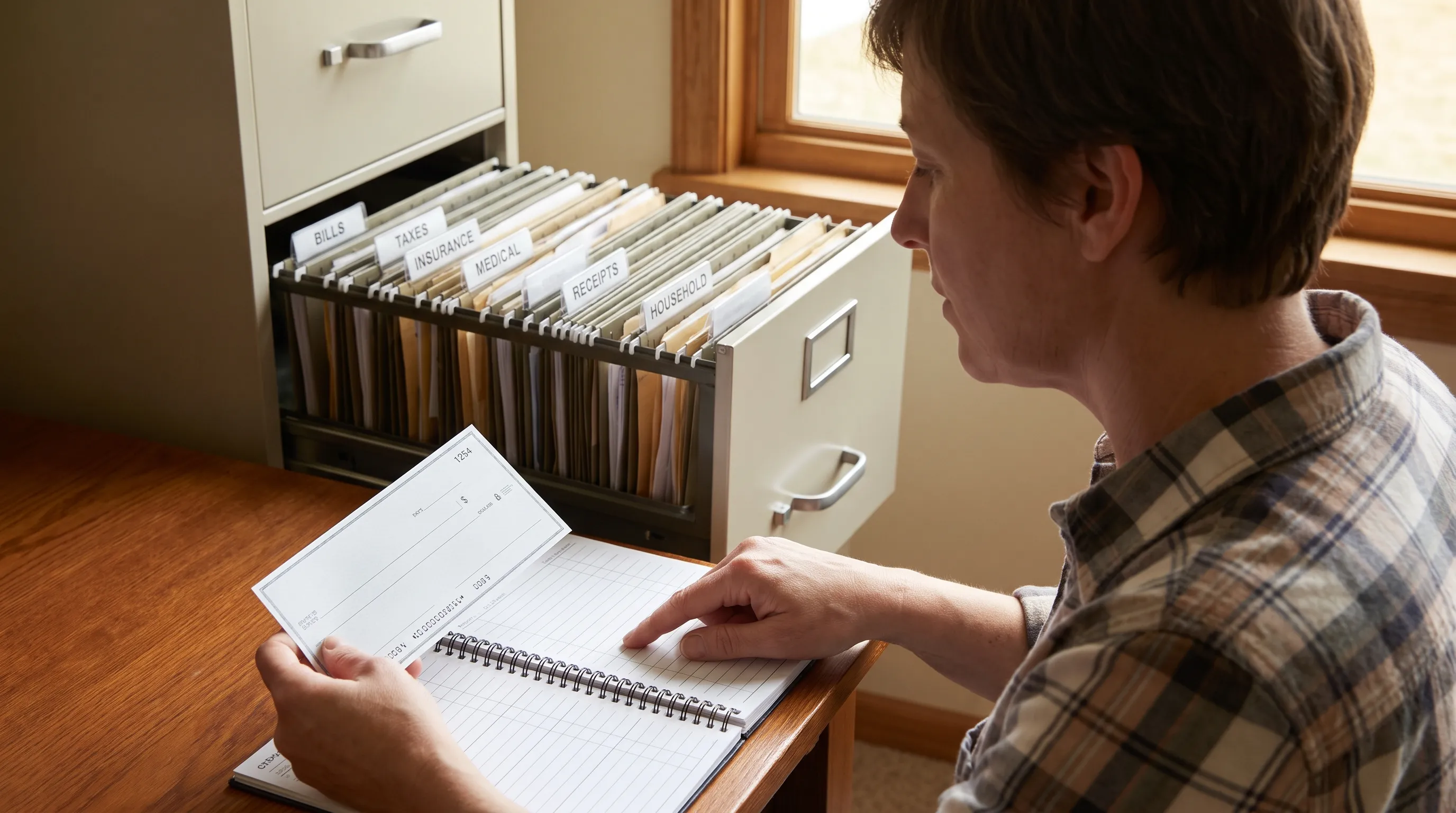
Your bank check number is usually printed in the upper-right corner of a U.S. paper check and often repeated along the bottom. It identifies that particular check within your account’s records, not the bank or the account itself.
If you are filling out a direct deposit form, you generally need the routing and account numbers instead. Here is how to tell them apart, find a missing check number and use it to match a payment to your records.
Where to look on a paper check
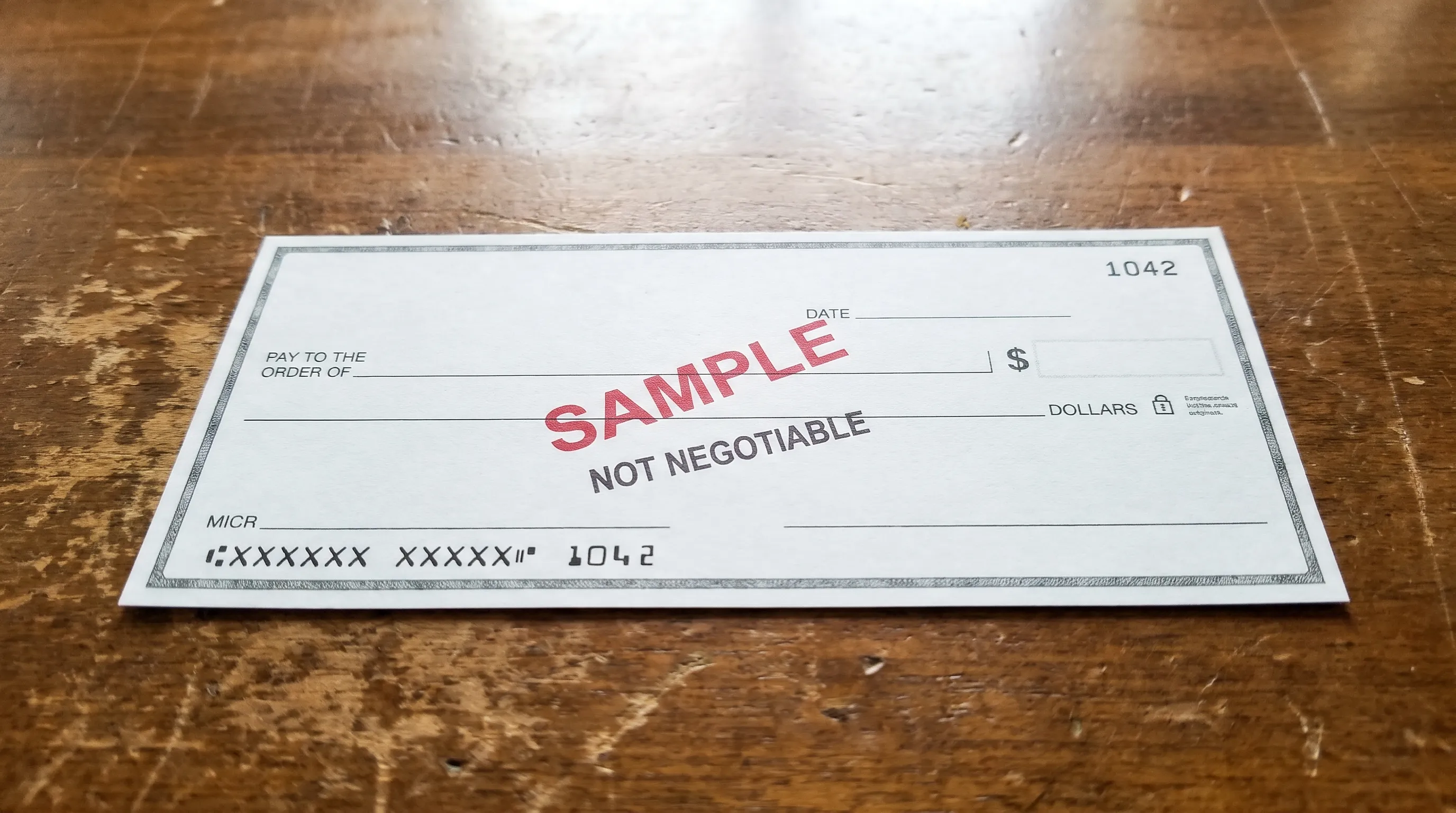
Start with the upper-right corner of the check. On a typical personal check, you will see a short number, such as 1042. That is usually the check’s serial number.
Next, inspect the bottom edge. The line of specially shaped characters is called the MICR line, short for magnetic ink character recognition. On many personal checks, the check number appears there again, commonly after the routing and account numbers.
Layouts vary. Business checks, computer-printed checks and cashier’s checks may place their serial numbers differently. There is no universal check-number length, so identifying a number only by counting its digits is unreliable.
Also, do not assume every number near the top-right corner is the serial number. A check may include a fractional routing code nearby. Look for the repeated serial number or ask the issuing bank if the layout is unclear.
What your bank check number identifies
The number helps you and your bank distinguish one check from others drawn on the same account. It connects the paper document to a check register entry, a paid-check image or a statement transaction.
It does not independently identify the account holder, prove the check is genuine or establish that payment has cleared.
Check numbers are not globally unique. Two unrelated accounts can both issue check 1042, and a number may eventually be reused within an account. For reliable identification, use the number together with the account context, amount, date and payee.
The sequence is useful for spotting gaps, but a missing number does not automatically indicate fraud. A check may have been voided, spoiled during printing or written but not yet presented for payment.
Check number vs. routing number vs. account number
The three numbers serve different purposes, even when they appear close together.
| Number | What it identifies | Typical location on a U.S. personal check | Common use |
|---|---|---|---|
| Check number | An individual check within an account’s records | Upper-right corner, often repeated in the bottom line | Tracking and reconciling check payments |
| Routing number | The financial institution used to route a payment | Usually the first group at the bottom left | Direct deposit, ACH payments and other bank transfers, subject to bank instructions |
| Account number | The specific account at the institution | Usually beside the routing number in the bottom line | Directing a payment to or from the account |
A U.S. ABA routing number has nine digits, as explained by the American Bankers Association. Account-number lengths vary by institution, while check-number lengths depend on the check format and numbering sequence.
Your bank check number should not be appended to your account number when completing a payment form. If the bottom-line groups are difficult to distinguish, use the account details provided through your bank’s official website or app rather than guessing.
How to find the number without the paper check
Check online banking or your bank’s app
Sign in through your bank’s official app or website and open the relevant checking account. Find the transaction by its approximate amount and posting date, then open its details.
Depending on the bank, you may see a check-number field or an image of the paid check. The image may show both the front and back. Availability and retention periods vary, so an older image may require a request to the bank.
A pending transaction may not yet include all the information available after posting. Also distinguish the date you wrote the check from the date the bank processed it.
Review statements and your check register
A statement may list paid checks in the transaction history or in a separate checks-paid section. Your checkbook register, duplicate check copy or accounting ledger may also contain the number.
To recover a missing bank check number, match several details rather than the amount alone. Two checks can have the same amount, and a bank’s transaction reference may not be the check’s serial number.
If the statement does not provide enough detail, ask the bank whether it can retrieve the paid-check image. For a check that has not been presented, your own records may be the best starting point.
Using check numbers to match payments
Check numbers are particularly useful during reconciliation, when you compare your records with transactions that have posted to the bank account.
Suppose your register records check 1042 for $480 to a repair contractor. Your statement shows check 1042 for $480 several days later. Open the check image, if available, to compare the payee and written amount before marking the payment as matched.
If the number matches but the amount differs, investigate the discrepancy. If the check does not appear on the statement, it may still be outstanding. Do not record a second expense merely because the original payment has not posted.
For business purchases, keep invoice references separate too. Whether you buy office supplies or equipment from a mining hardware supplier such as Dahab Miners, the invoice number identifies the bill. If a supplier payment is made by check, its check number identifies the payment document. Recording both makes later questions easier to resolve.
A bank check number is therefore a matching aid, not a substitute for supporting evidence. Our guide to reading a bank statement and verifying transactions explains the broader review process.
Which numbers should you use for direct deposit?
For direct deposit or an ACH debit authorization, you generally provide your routing number and account number, along with the account type and any other details the form requires. The check’s serial number is normally unnecessary.
If you do not have a checkbook, look for account details or a direct deposit form in online banking. You can also request the information directly from your bank.
Do not enter a bank check number just because a form asks for “bank details.” Read the field labels carefully. Banks may use different routing instructions for ACH payments and wire transfers, so confirm the instructions for the payment method you intend to use.
Can a check number verify that a check is genuine?
No. A serial number alone cannot authenticate a check or guarantee payment. A counterfeit check can display plausible routing details, an account number and a convincing serial number.
If you receive a suspicious check, contact the purported issuing bank using contact information you obtain independently from its official website. Do not rely solely on a phone number printed on the check. The bank may have limits on what it can confirm, and any information it provides is not a guarantee of eventual payment.
The Federal Trade Commission’s guidance on fake check scams explains that funds can become available before a bank discovers that a check is fraudulent. An available balance is not proof that the check is good.
Never send money back to a stranger, purchase gift cards or transfer cryptocurrency because someone says they overpaid you by check. Your bank check number, a deposited-check receipt or a convincing payment story does not remove that risk.
Handle check images and account details carefully
A full check image can expose the account holder’s name, address, routing number, account number and signature. Avoid posting one publicly or sending it through an unverified website that promises to “validate” a check.
Use your bank’s secure channels when requesting images or reporting a problem. If you need to share a copy with an accountant or another authorized recipient, use an appropriate secure method and disclose only what they need.
If a check is lost, stolen or altered, contact your bank promptly. Ask about available actions, including stop-payment procedures, applicable fees and any reporting deadlines. Providing the number, amount, payee and issue date can help the bank locate the item.
Frequently asked questions
Is a bank check number the same as an account number? No. The check number identifies an individual check within the account’s records. The account number identifies the account itself.
How many digits does a check number have? There is no universal length. Personal checks often use short serial numbers, but business and bank-issued check formats can differ. Location and context are more useful than digit count alone.
Can two checks have the same number? Yes. Different accounts can use identical check numbers, and numbers can be reused. Compare the account, amount, date and payee before treating two records as the same payment.
Can I find a check number on my bank statement? Often, but not always. Some banks show it beside the transaction or in a checks-paid section. Others provide more detail through online transaction records or paid-check images.
What if I do not recognize a check listed on my statement? Review the check image and your records, then contact your bank promptly if it remains unfamiliar. Do not assume a familiar-looking number means the payment was authorized.
Keep check references connected to verified statement figures
When moving statement transactions into a spreadsheet, preserve check references where available and compare them with the original document. Keep separate fields for invoice numbers and bank-generated transaction references so they are not mistaken for check serial numbers.
Extract Bank Statements converts statement PDFs into CSV or Excel and checks figures against the statement’s running balance and declared totals before export. Those checks help establish numerical consistency; they do not authenticate a check or prove authorization.
Use the bank check number to locate the payment, supporting records to explain it and verified statement figures to reconcile it.